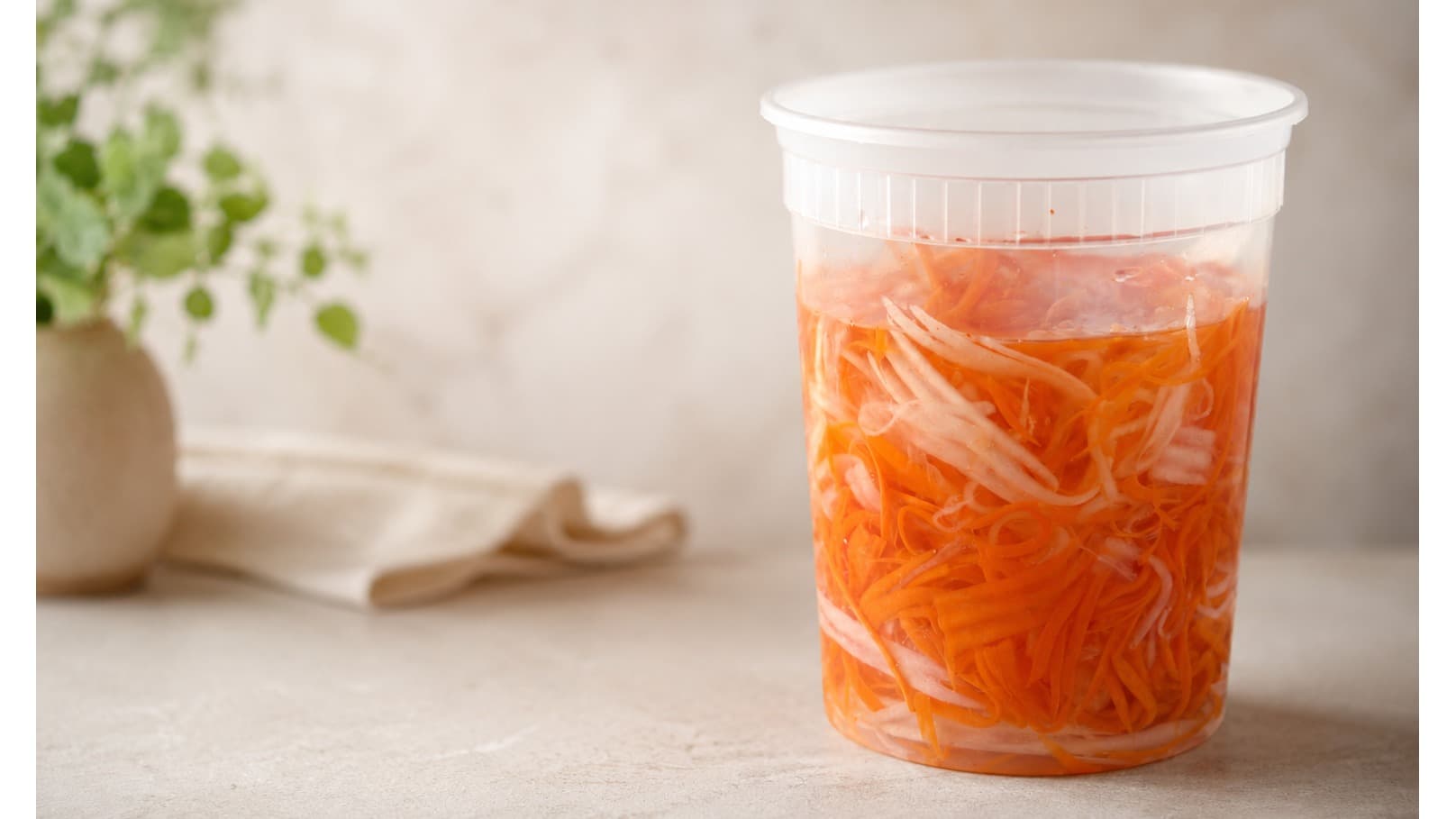
Vietnamese Pickled Carrots and Daikon
This is one of THE most quintessential accompaniments to many Vietnamese dishes that helps in balance the dish between salt, savory and tangy.
Cooking Method
- •Pickling
Ingredients
- •2 medium carrot whole
- •1 medium daikon radish
- •1 tablespoon Salt(9 g)
- •1 ½ cup hot water(354 ⅞ ml)
- •¾ cup Sugar(97 ½ g)
- •¾ cup distilled white vinegar(177.4 ml)
How to make Vietnamese Pickled Carrots and Daikon
- 1
Peel and using a julienne peeler or mandolin to cut the carrots and daikon and place in a medium mixing bowl.
- 2
Add in salt and massage into the julienned carrots and daikon, side aside for 15 minutes. This will help draw out moisture from the carrots and daikon.
- 3
Rinse well with water and use a cheese cloth or lots of paper towels, wring out as much liquid as possible.
- 4
Bring ½ cup of water to a boil and add sugar, stir to dissolve. Once dissolve add distilled vinegar and set aside.
- 5
Place carrots and daikon into a clean and sterile mason jar.
- 6
Carefully pour the vinegar, water, sugar solution into the mason jar to cover carrots and daikon.
- 7
Once cooled, this can keep in the fridge for up to 3 weeks.
- 8
Note: To store, you can used one large mason jar or (2) 2 quart containers.
Nutritional Information
Per Serving
Total (12 servings)
Nutritional values are estimates based on the provided ingredients and serving size. Actual values may vary based on specific brands and preparation methods.
These ingredients use AI-estimated values. Click to enter verified data from food labels or USDA database for more accurate results.